The Shiant Islands

Considering
a landing?
The Shiant Isles are a living, working group of islands shaped by a rich human history. People lived here for centuries until the early twentieth century.
Since permanent settlement ended, the islands have become a protected nature reserve and a fragile ecosystem.That same principle of care still applies. Thin soils, ground nesting birds and exposed cliffs mean even small disturbances can have lasting consequences when repeated.

Cumulative impact ::
Long term observation shows that impact is rarely caused by a single visit. It is the accumulation of many brief landings that introduces strain. Repeated footfall can erode soils, disturb nesting seabirds and interrupt the rhythms of crofting and conservation. A landing that feels harmless on its own can become significant when repeated across a season or a year.
Seasonal sensitivity ::
The islands follow precise natural cycles. Breeding seabirds, vulnerable vegetation and livestock are particularly sensitive at certain times of year (typically between March-September). Landings during these periods, whether planned or unplanned, can have disproportionate effects. Damage caused in a short window can take years to recover.
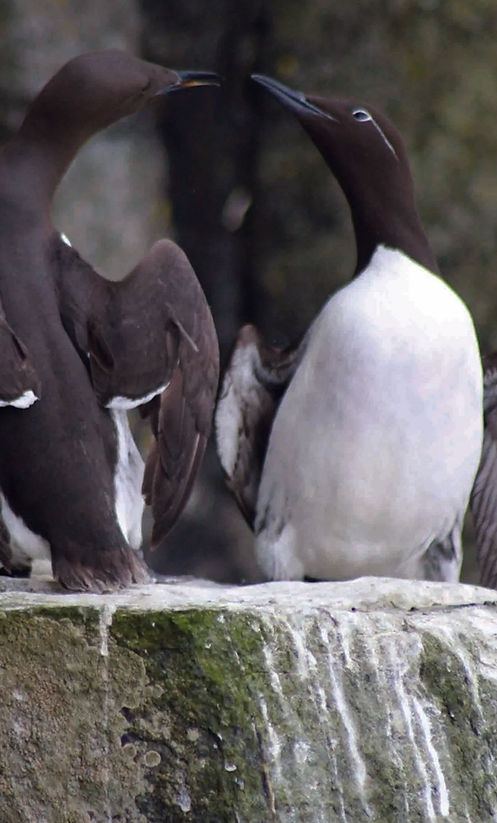
Birds nest across the island - including in cliff burrows, boulder screes, wet marshland and the ground - and are vulnerable to disturbance by visitors on foot.
Disturbance is also possible close to the shoreline, which seabirds use for resting, preening, roosting and feeding.


Biosecurity and prevention ::
The Shiant Isles have benefited from sustained recovery efforts, including habitat restoration and the eradication of invasive species. Experience has shown that prevention is far more effective than remediation. Keeping the islands free from new threats is essential and even minor oversights can have long term consequences.
Purposeful presence ::
Human presence is valued when it is deliberate and connected to the ongoing work of the islands. Crofters, researchers and long term visitors contribute directly to stewardship and understanding. Short and casual visits, even when well intentioned, carry cumulative risks that can undermine this balance.
Landing locations and daily life on the island
::
The Shiant Isles are not only a place of conservation but a place to stay for extended periods. The cottage is the centre of that daily life. Movement around it is functional and deliberately limited. When visitors land on nearby beaches, even with care and good intentions, it naturally draws people inland towards the building and surrounding ground.
The issue is rarely behaviour in isolation. It is the constancy of movement in the same area over time. Small amounts of repeated footfall gradually lead to changes in breeding success for ground nesting birds, how paths form and how resilient vegetation responds. In an exposed island environment, these effects accumulate slowly but are difficult to reverse.
There are also long term biosecurity considerations. Areas around the cottage are where equipment, supplies and materials are handled. Limiting casual access reduces the risk of introducing seeds, insects or pathogens into zones that are actively managed and monitored.
Just as importantly, those staying on the island do so to experience genuine remoteness. Regular movement around the cottage, however careful, alters that experience and shifts the character of the place from lived isolation to thoroughfare.
For these reasons, landings are deliberately directed away from beaches that naturally lead towards the cottage.


An alternative
landing point ::
An alternative landing location has been identified on Mary Island following guidance from ecological groups and long standing experience of the islands. This location allows access without drawing movement towards the cottage or sensitive working areas and reduces pressure on the main island.
The agreed landing point can be found at what3words ///recliner.sank.prep
Choosing this landing point supports the long term care of the islands while allowing people to engage with them responsibly.
A considered choice ::
For many, observing from the sea, learning about the islands, and supporting conservation from a distance are the most appropriate ways to engage. For those who wish to spend more time on the islands, staying offers a different relationship with the place. Time slows, presence is intentional and movement becomes part of the rhythm of island life rather than a disruption to it.
